
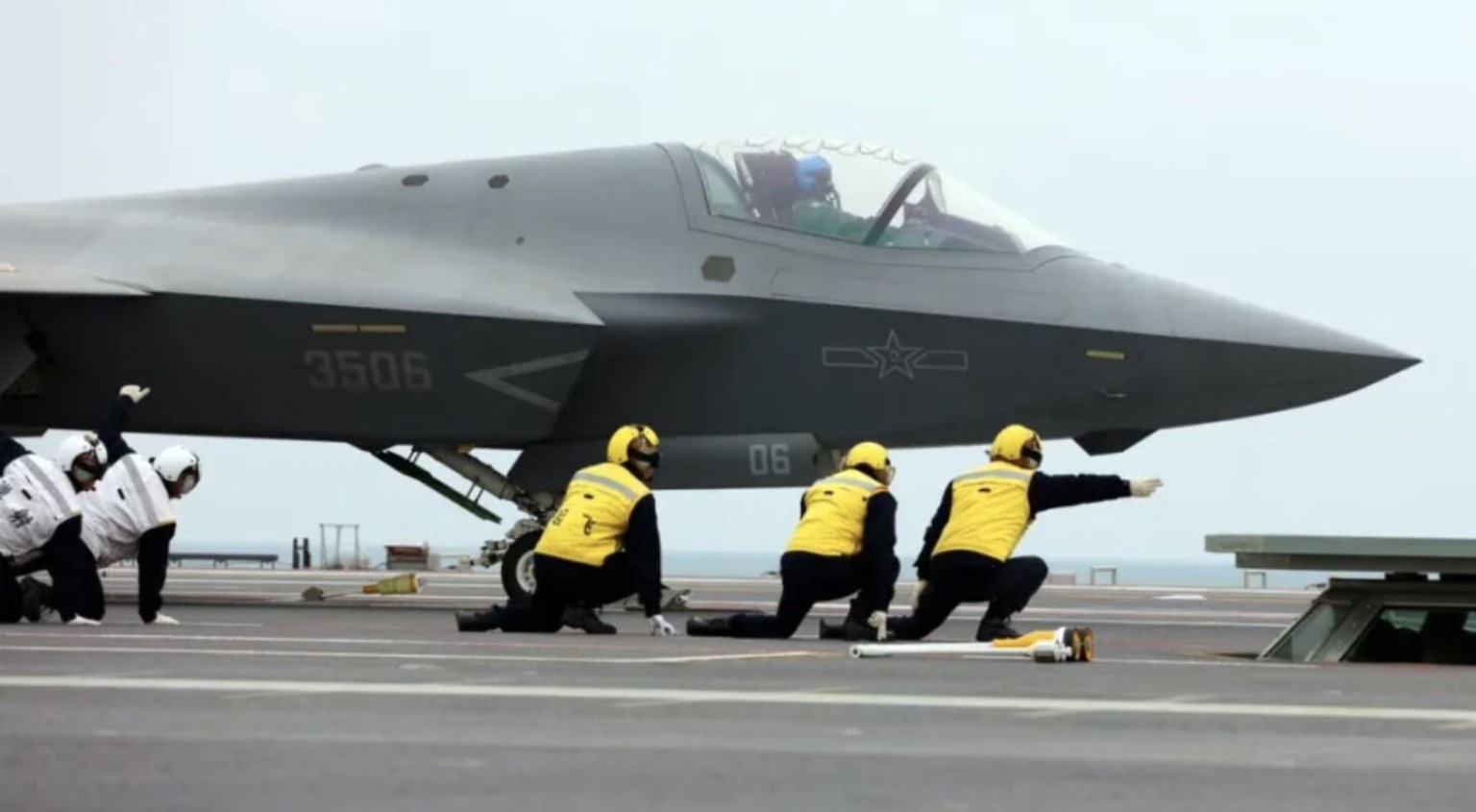
J-35 Preparing for Takeoff from the Supercarrier Fujian. Source: Weibo.
The Fujian’s first year in service has brought catapult and recovery trials with several aircraft types. Chinese reporting describes further work toward sustained flight-deck operations and a more fully integrated carrier group.
Summary
Chinese reporting marking the first anniversary of the aircraft carrier Fujian’s commissioning described a year of trials, cross-area training and aircraft integration. The carrier has publicly demonstrated electromagnetic-catapult launches and arrested recoveries involving the J-35, J-15T and KJ-600. Chinese state media characterises the ship as having reached an optimised state and as moving from basic toward fuller combat capability. The available record confirms important platform and flight-operation milestones, but does not establish sustained high-tempo sorties, all-weather readiness or mature carrier-group combat integration.
1. What the reporting establishes
The Fujian was commissioned on 5 November 2025 as China’s first aircraft carrier equipped with electromagnetic catapults. In September 2025, Chinese authorities released footage of the J-15T, J-35 and KJ-600 conducting catapult-assisted takeoffs and arrested landings during trials. A subsequent maritime training deployment involved the J-15T, J-15DT electronic-warfare aircraft, J-35 and KJ-600, alongside formation navigation and ship-aircraft search-and-rescue activity.
Chinese state-media retrospectives released around the November 2026 anniversary say the carrier continued trials and training across several sea areas during its first year in service. They also describe further work to improve the platform and its combat capability. A military commentator quoted in CCTV coverage called the carrier’s condition “optimised,” while noting that additional subsystem checks and performance improvements remained necessary. This is an attributed characterisation, not a published readiness certification.
2. Aircraft and carrier-group integration
The announced air wing combines distinct functions. The J-35 is a carrier-based fighter; the J-15T provides a heavier multirole fighter element; the J-15DT is identified in Chinese reporting as an electronic-warfare variant; and the KJ-600 is a fixed-wing airborne early-warning and control aircraft. In principle, electromagnetic catapults permit the carrier to launch aircraft with different mass and mission requirements, while a fixed-wing early-warning platform can extend airborne surveillance beyond the ship’s own sensors.
Chinese accounts have also identified escort-ship training and future, more complex joint exercises as priorities. A Type 055 destroyer operating with a carrier would add air-defence, strike and command functions to the formation. The operational value of these capabilities depends on how well aircraft, escorts and the carrier exchange a recognised tactical picture, coordinate tasking and maintain flight operations while managing maintenance, refuelling and rearming.
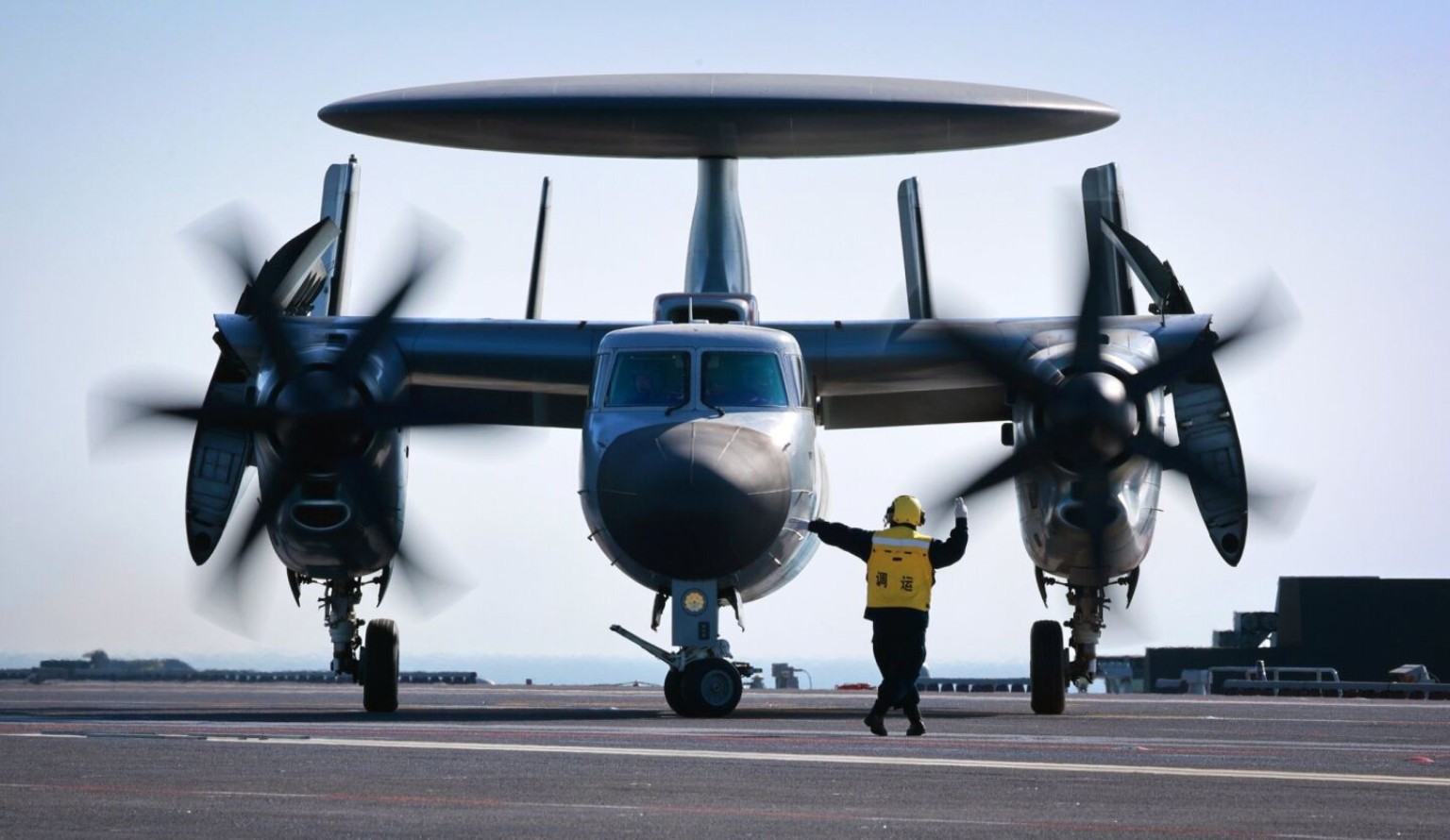
KJ-600 AEW&C aircraft on the deck of the supercarrier Fujian. Source: Weibo.
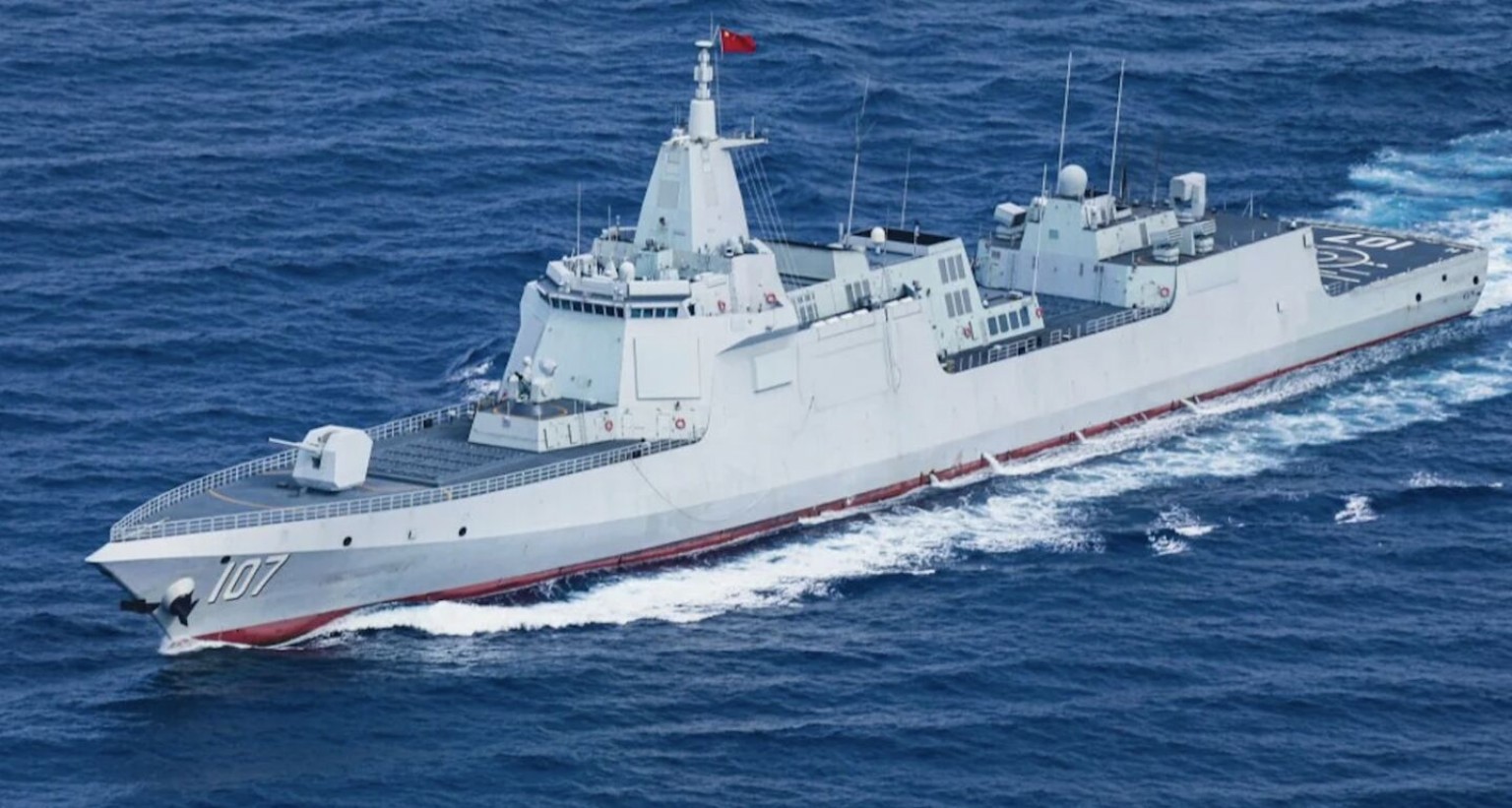
Chinese PLA Navy Type 055-class destroyer underway. Source: Weibo.
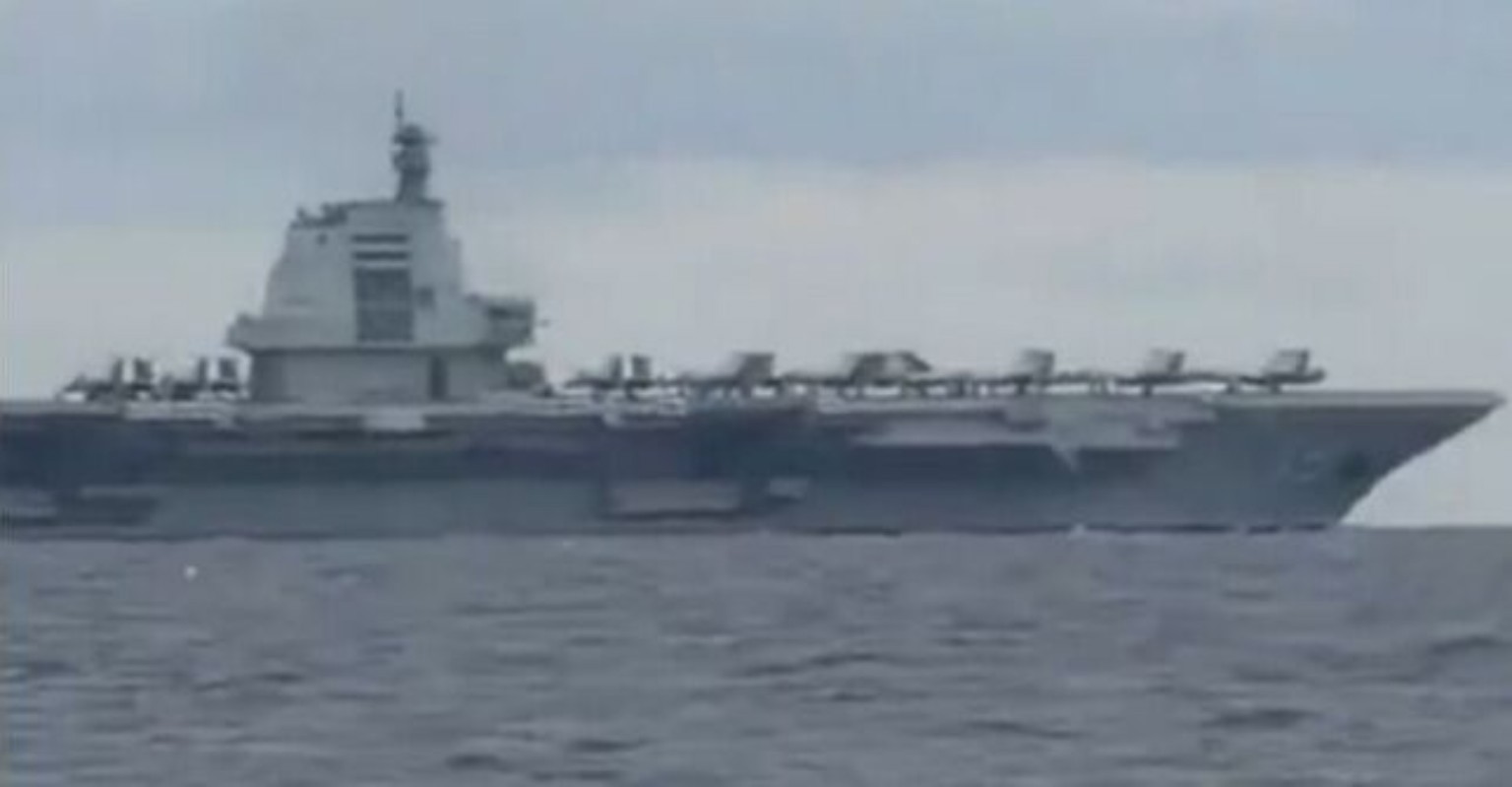
Supercarrier Fujian with J-15 combat jets on deck in November 2026. Source: Weibo.
Assessment and implications
The public record supports a clear progression from catapult-system and aircraft compatibility trials to live-force training and cross-area activity. It does not show that the Fujian has completed the demanding cycle required for sustained carrier operations. Chinese reporting itself identifies full-deck launch-and-recovery rates, night operations, activity in difficult weather or sea states, and closer ship-aircraft command and information integration as further challenges on the path to a more complete combat capability.
The distinction matters operationally. A carrier’s effectiveness is not measured by the presence of advanced aircraft alone. It depends on qualified aircrew and deck teams, aircraft availability, maintenance capacity, fuel and weapons handling, sortie generation, airborne surveillance coverage, communications resilience and coordination with escorts and submarines. Repeated evidence of sustained flight operations under varied conditions would provide a stronger indicator of maturity than anniversary imagery or isolated aircraft movements.
Confidence is high that the Fujian has conducted electromagnetic-catapult operations with multiple aircraft types, as publicly reported by Chinese authorities. Confidence is moderate in the broader account of first-year training, which is based mainly on official releases. The available public evidence is insufficient to assess sustained sortie rates, operational availability or the carrier group’s performance in a contested environment.
Naval Warfare Analyst · Intelligence World