
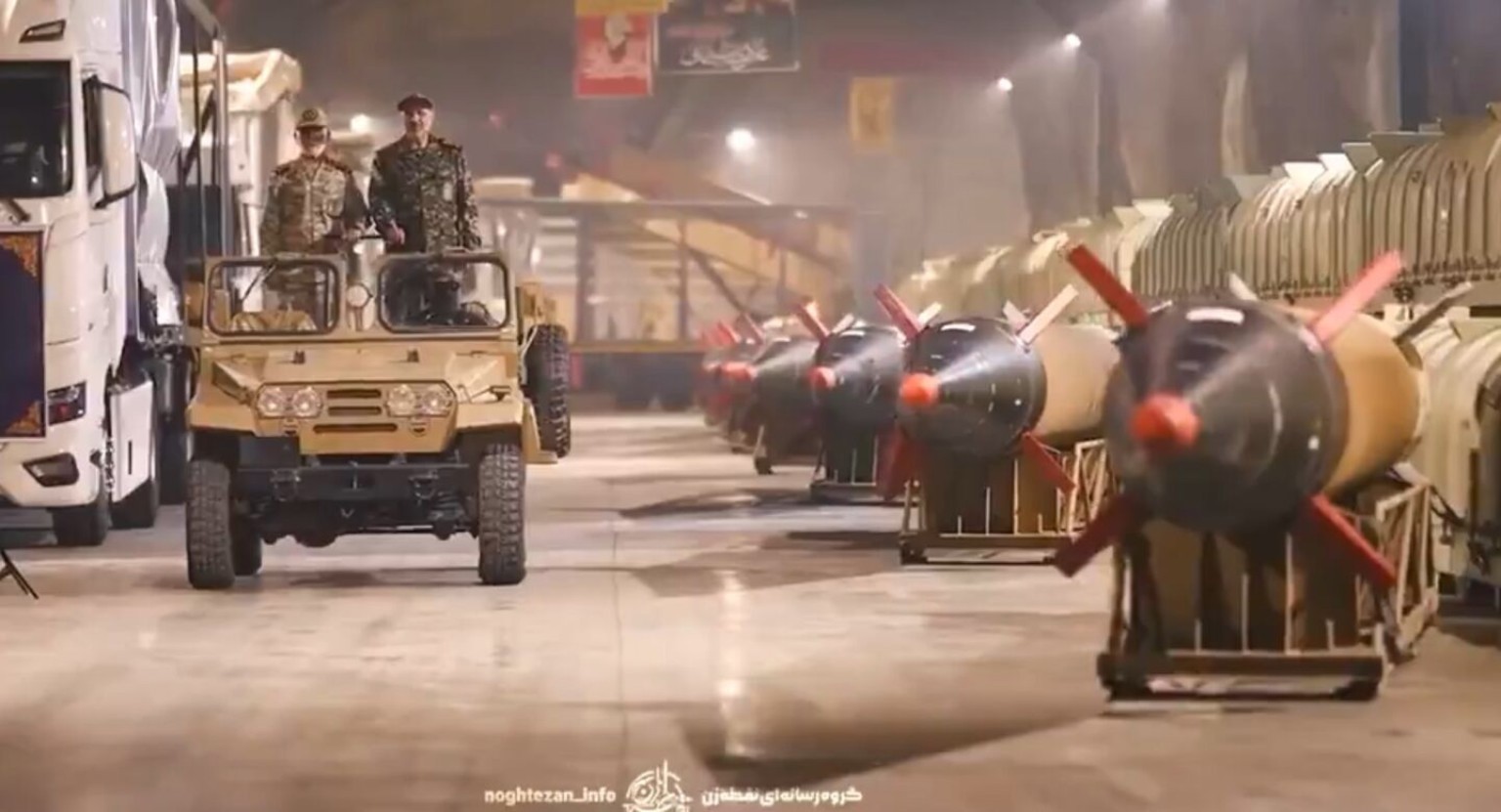
Iranian Officers Inspect Underground Missile Facility Source Iranian footage
Senior commanders tour a site presented as a new missile base; its location, capacity and operational status remain undisclosed.
Date: 11 November 2026
Geographic area: Iran / Middle East
Intelligence domain: Missile Forces / Military Capabilities
Summary
Footage released by Iran’s Islamic Revolutionary Guard Corps (IRGC) shows senior military officers touring an underground complex containing missiles, launchers and support vehicles. Iranian authorities presented the installation as a new “missile city,” but did not disclose its location or when the visit was filmed. The material documents a public display of equipment; it does not establish the facility’s size, readiness or ability to sustain missile operations under attack.
1. What the footage shows
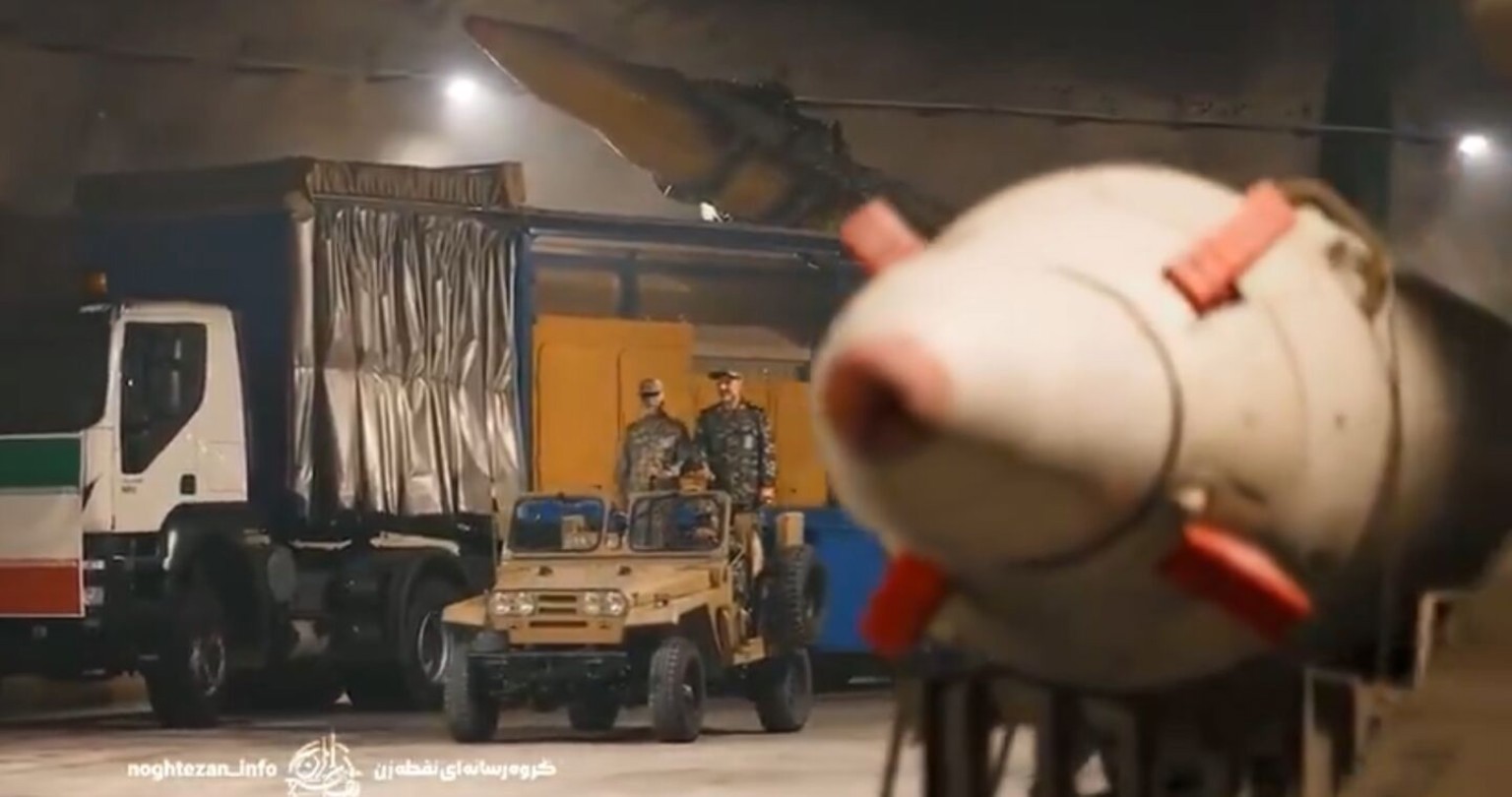
The video shows two senior officers riding through a tunnel in a light vehicle and stopping beside rows of missiles and associated equipment. Iranian reporting identified them as Armed Forces Chief of Staff Major General Ali Abdollahi and IRGC Aerospace Force Commander Brigadier General Majid Mousavi. Tehran has not provided information that would independently establish when the footage was recorded or whether the complex was recently built.
2. Equipment display and operational limits
The displayed equipment indicates that the site is presented as a storage and support location for missile units. Some reporting has proposed possible missile types, but the images do not support a reliable model identification. A filmed display cannot establish that the weapons are serviceable, that launchers are operational, or that the facility can generate sorties at a particular rate.
3. Alleged strike imagery
The same IRGC-released video includes nighttime imagery presented as showing an Iranian Fattah-2 striking a hardened target in Israel. The sequence does not, on its own, establish the weapon’s identity, the location or nature of the target, or the date and circumstances of the event. It should therefore be treated as an Iranian claim conveyed through imagery, not as independent confirmation of a Fattah-2 strike or of damage to a specific target.

Assessment and implications
The release serves two related purposes: displaying a survivable missile infrastructure and signalling that Iran intends to preserve a retaliatory capability. Underground storage can complicate detection and attack, but the footage does not reveal the factors needed to assess the site’s actual resilience, including its location, depth, tunnel layout, protected access points, dispersal, communications, logistics or ability to move launchers from storage to firing positions.
The imagery provides evidence of what the IRGC chose to show, not a measure of the force’s remaining inventory or operational readiness. The missile display and the alleged impact sequence should be assessed separately; neither verifies the other.
Military Capabilities & Force Structure · Intelligence World