
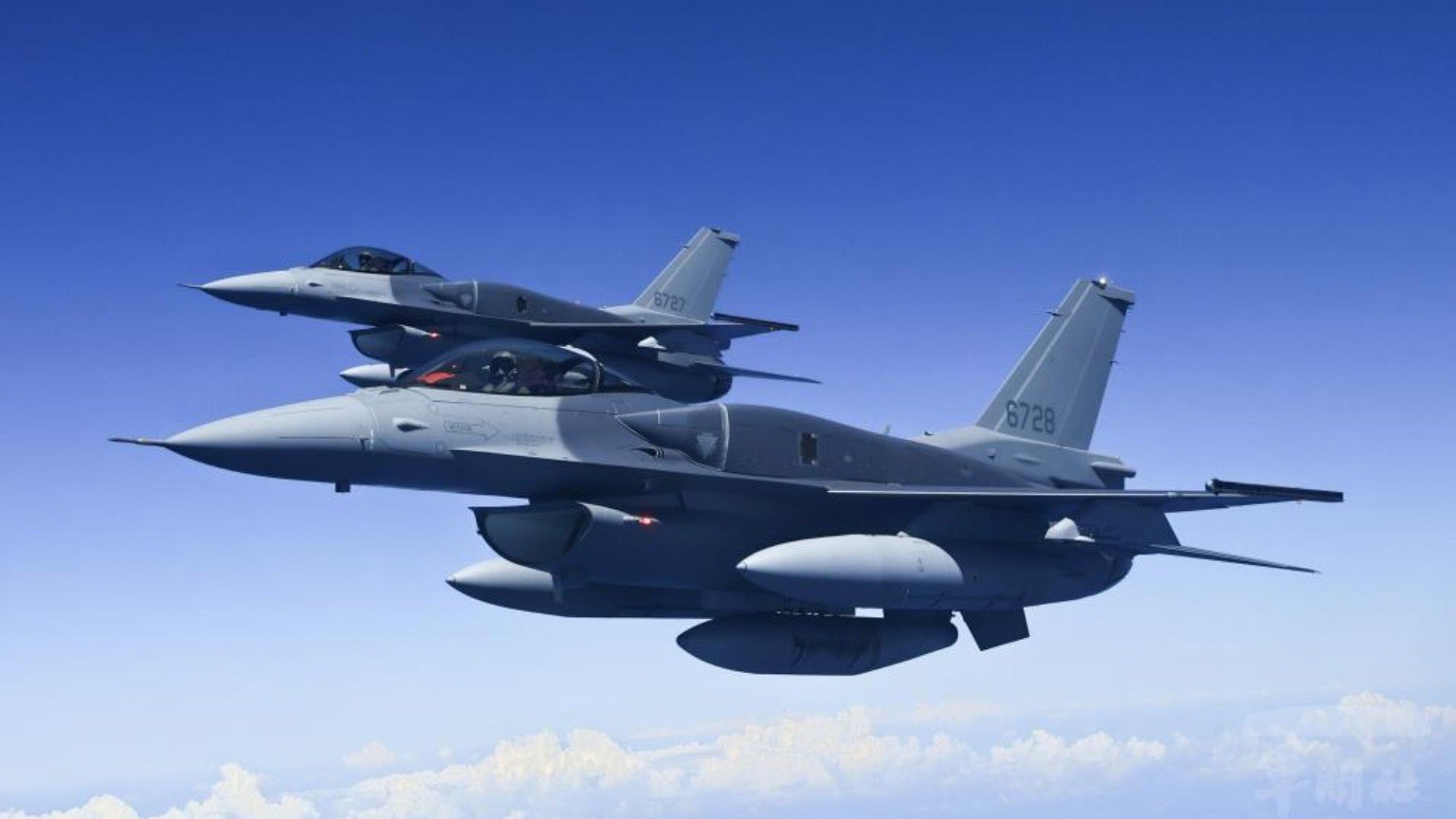
Archive image: Republic of China Air Force F-16 Block 70 from the first delivery to Taiwan in October 2026. Photo: Taiwan Ministry of National Defense.
The second delivery brings the new-build fleet received in Taiwan to five aircraft, while unit conversion and operational integration remain underway.
8 November 2026 | Taiwan | Air & Air Defence
Three newly built F-16V Block 70 fighters arrived at Taiwan’s Chihhang Air Base in Taitung on 8 November, according to the Republic of China Air Force. The aircraft, identified as 6729, 6731 and 6732, form the second batch of a 66-aircraft purchase from the United States. Their arrival advances deliveries but does not, by itself, establish combat readiness or initial operational capability.
1. SECOND BATCH ARRIVES
Taiwan’s Air Force Command confirmed that three fighters landed at Chihhang Air Base on the morning of 8 November. They followed the first two Block 70 aircraft, serials 6727 and 6728, which arrived on 2 October. With five aircraft received, the programme has moved from its initial handover phase into an early period of domestic induction and training.
The new-build aircraft belong to an order for 66 F-16V Block 70 fighters approved by the United States in 2019. Previous delivery targets were affected by delays. While the latest arrivals indicate that deliveries are proceeding, the available reporting does not establish when the full fleet will be delivered.
2. OPERATIONAL INTEGRATION
The Air Force said it would continue training associated with bringing the aircraft into service and progressively develop initial operational capability. This distinction matters. The physical arrival of an aircraft is not equivalent to a unit being ready for sustained combat operations. Integration requires trained crews, ground personnel, mission-support equipment, maintenance arrangements, weapons certification and established command-and-control procedures.
Taiwan already operates F-16s upgraded to the Viper standard. Those upgrades are separate from the acquisition of the 66 new Block 70 fighters. Conflating the two would overstate the number of newly delivered airframes and obscure the programme’s actual progress.
3. INTELLIGENCE WORLD ASSESSMENT
The second delivery is a measurable step in Taiwan’s fighter-force renewal, but its immediate operational significance remains limited by the small number of newly received aircraft and the training and support work still required. The relevant indicators are not only the rate of aircraft handovers but also the pace at which the ROCAF generates qualified crews, equips and sustains units, and completes operational integration.
For a force exposed to sustained air-defence and readiness demands, delivery continuity, spare parts, maintenance depth, protected operating facilities and sortie-generation capacity will determine how far the acquisition translates into an enduring capability. No conclusion on increased combat availability can be drawn solely from this three-aircraft arrival.
4. INDICATORS TO MONITOR
Subsequent deliveries, official announcements of unit acceptance or initial operational capability, conversion training, maintenance and weapons integration milestones, and evidence of routine operational flying will provide a firmer basis for judging the programme’s progress. A revised, publicly substantiated delivery schedule would also be significant.
Military & Defence Analysis Team — Air & Air Defense Analyst