
Category: Product Type
-

A source-qualified review of the B-21 Raider’s intended mission, two-pilot crew, flight-test and low-rate production status, planned force structure, and limits of open-source evidence.
-

An assessment of Iraq’s Popular Mobilization Forces, the Jurf al-Sakhr security arrangement and Baghdad’s efforts to bring factional command, weapons and financing under effective state control.
-

An assessment of North Korea’s new mobile SAM test, the limits of public evidence and the sensors, command links and support needed to create a credible layered air-defence capability.
-

Antonio Teti examines how AI can support intelligence analysis through information retrieval, fusion and comparison of hypotheses, while preserving evidence traceability, uncertainty and the analyst’s responsibility for judgment.
-

An assessment of SAMP/T NG industrial capacity, ASTER missile output, contracted units and the conditions shaping sustainable European air defence.
-

An assessment of Moscow’s air-defence architecture, command structure, radar network, adaptation to unmanned aerial threats and operational limits.
-

China’s PHL-191 gives PLA Ground Force artillery a modular long-range fires option. This Analysis examines its launcher and munition architecture, targeting and sustainment dependencies, and potential role in a Taiwan contingency.
-

An assessment of reported Russian military sealift activity from Baltiysk in October–November 2026, including two merchant convoys, Russian Navy support and unresolved destination assessments.
-
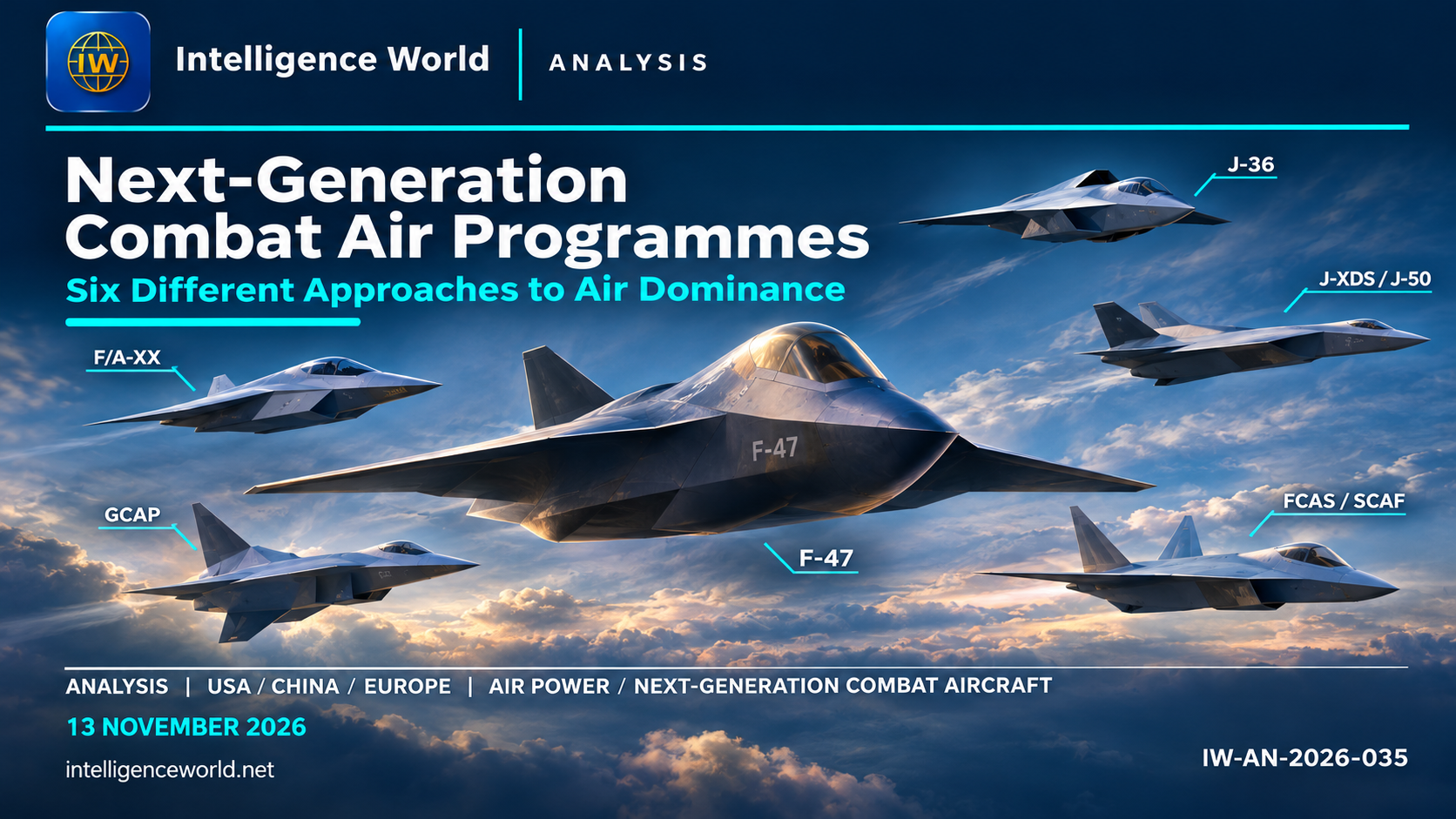
A comparison of F-47, F/A-XX, J-36, J-XDS/J-50, GCAP and FCAS/SCAF, examining how distinct operational requirements, force architectures and programme structures shape future air dominance.
-

A source-qualified overview of the Chengdu J-20’s reported operational fielding, observable design characteristics and the limits of public evidence on readiness and combat effectiveness.