
Tag: Counter-UAS
-

NATO’s ISR reinforcement can improve warning and incident reconstruction in the Black Sea. Its effect on physical protection depends on timely data fusion, clear authority and available response forces.
-

How the PLA studies Ukraine’s war and translates lessons on drones, electronic warfare, ISR and command into training and military adaptation, with implications for Taiwan.
-
Event date: September 2026 exercise; reported 5 October 2026 At the Falcon Peak exercise in Arizona, U.S. Army personnel observed demonstrations of radars, interceptor drones and autonomous gun systems designed to detect, track and defeat small unmanned aircraft. Army officials said cartels use commercially available drones for surveillance connected to smuggling and human trafficking. A…
-

Centre-2026 provides evidence that Russia is moving beyond battlefield adaptation toward the institutionalization of lessons developed during more than four years of war in Ukraine. The exercise integrated unmanned systems, counter-UAS defence, reconnaissance-fire coordination, contested logistics, robotic platforms and small-unit tactical adaptation into strategic-level training and multinational exercises. The evidence supports a judgment of partial…
-

Russia’s jet-powered Geran-5 compresses air-defence reaction time and increases the challenge for layered Ukrainian interception systems.
-
Event date: 28 September 2026 (memorandum); published 2 October 2026 U.S. Defense Secretary Pete Hegseth issued a 28 September memorandum, made public on 2 October, directing faster integration of counter-drone capabilities across military installations, critical infrastructure and other domestic assets. DefenseScoop reports that the five-page directive targets procedural bottlenecks, including spectrum and frequency approvals and…
-
Ukraine is testing five types of high-speed interceptor drones to counter Russia’s newer jet-powered UAVs, seeking a scalable and lower-cost response to faster threats that compress engagement timelines.
-

Finland’s entry into the French forward deterrence initiative adds a strategic dialogue alongside NATO and JEF structures, while leaving nuclear command authority unchanged. This analysis examines how shared ISR, rapid attribution, regional command arrangements and conventional readiness would shape deterrence below the nuclear threshold on NATO’s northern flank.
-
Ukrainian manufacturers are accelerating development of faster interceptor drones to counter Russia’s new jet-powered UAVs. The higher speed and altitude of the incoming systems are reducing engagement time for existing short-range defences, while new interceptor concepts are incorporating jet propulsion, improved cooling and AI-assisted guidance.
-
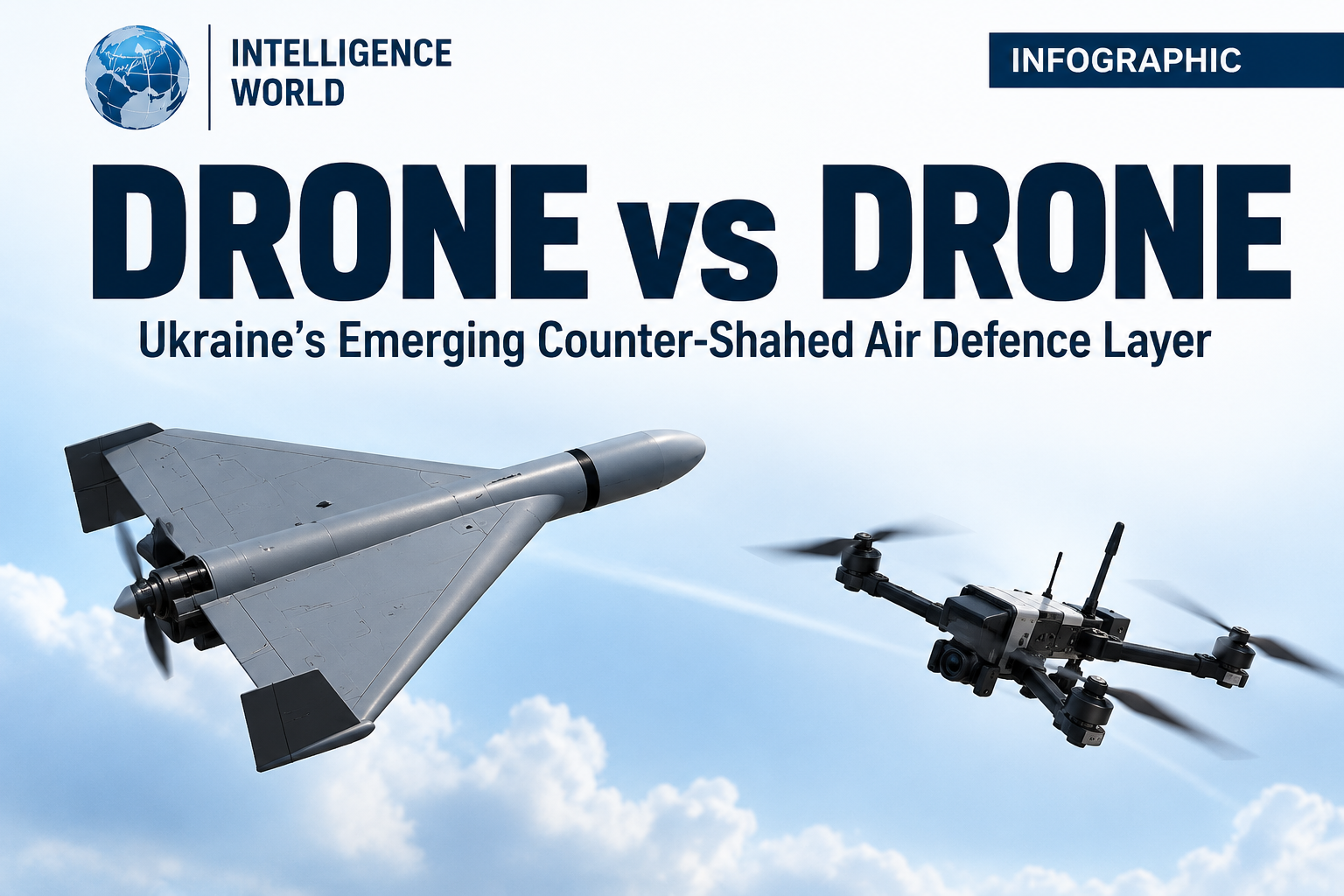
How Ukraine is integrating sensors, C2 and low-cost interceptor UAVs to counter the evolving Shahed/Geran threat.