
Tag: Ukraine
-
Open-source named-death records show a persistent regional imbalance in Russian military losses, with Tuva and Buryatia repeatedly ranking above Moscow in per-capita comparisons. This Analysis examines the recruitment and force-generation dynamics behind that disparity and explains why the map’s individual regional rates should be treated as illustrative rather than definitive.
-
This dossier assesses how Russia’s Armed Forces may evolve from the war against Ukraine. It examines force regeneration, battlefield learning, industrial capacity and structural constraints, and outlines three force-development trajectories to 2030.
-
South Korea’s National Intelligence Service told lawmakers that Seoul made no commitment to provide military aid to Ukraine in exchange for accepting two North Korean soldiers captured in Russia’s Kursk region. Their transfer provides South Korean intelligence with direct access to personnel who served alongside Russian forces and may yield information on North Korean deployment,…
-
Russia is sustaining attacks against Kyiv using ballistic missiles and high-speed jet-powered UAVs. Ukrainian air defence is facing compressed engagement timelines while Patriot interceptor availability remains a limiting factor. The operational significance is the continued integration of high-speed UAVs into mixed strike packages designed to complicate Ukrainian air-defence response. Source: Ukrainian Air Force; AP; corroborating…
-
Russian forces launched a large overnight strike against Ukraine, with attacks reported against Kyiv and the surrounding region, energy infrastructure and port facilities in Izmail. Ukrainian officials reported civilian casualties and damage, while Romania and Poland scrambled military aircraft to protect their airspace during the attack. Russia said the strike targeted a communications centre in…
-
Russia’s latest decree raises the authorised military ceiling by 15,500 posts, continuing a series of 2026 adjustments. The measure formalises a larger force establishment but does not establish actual manning, readiness or deployment. The Analysis assesses force sustainment, future capacity and the NATO factor.
-
Russian attacks struck multiple Ukrainian regions, including Kyiv, Dnipro, Kharkiv, Zaporizhzhia, Odesa and Chernihiv. Reporting indicates employment of high-speed jet-powered UAVs alongside the broader strike package. The technical significance lies in the higher speed and operating envelope, which can compress Ukrainian air-defence engagement timelines. Source: Ukrainian authorities and corroborating international and specialist reporting. Related Intelligence…
-
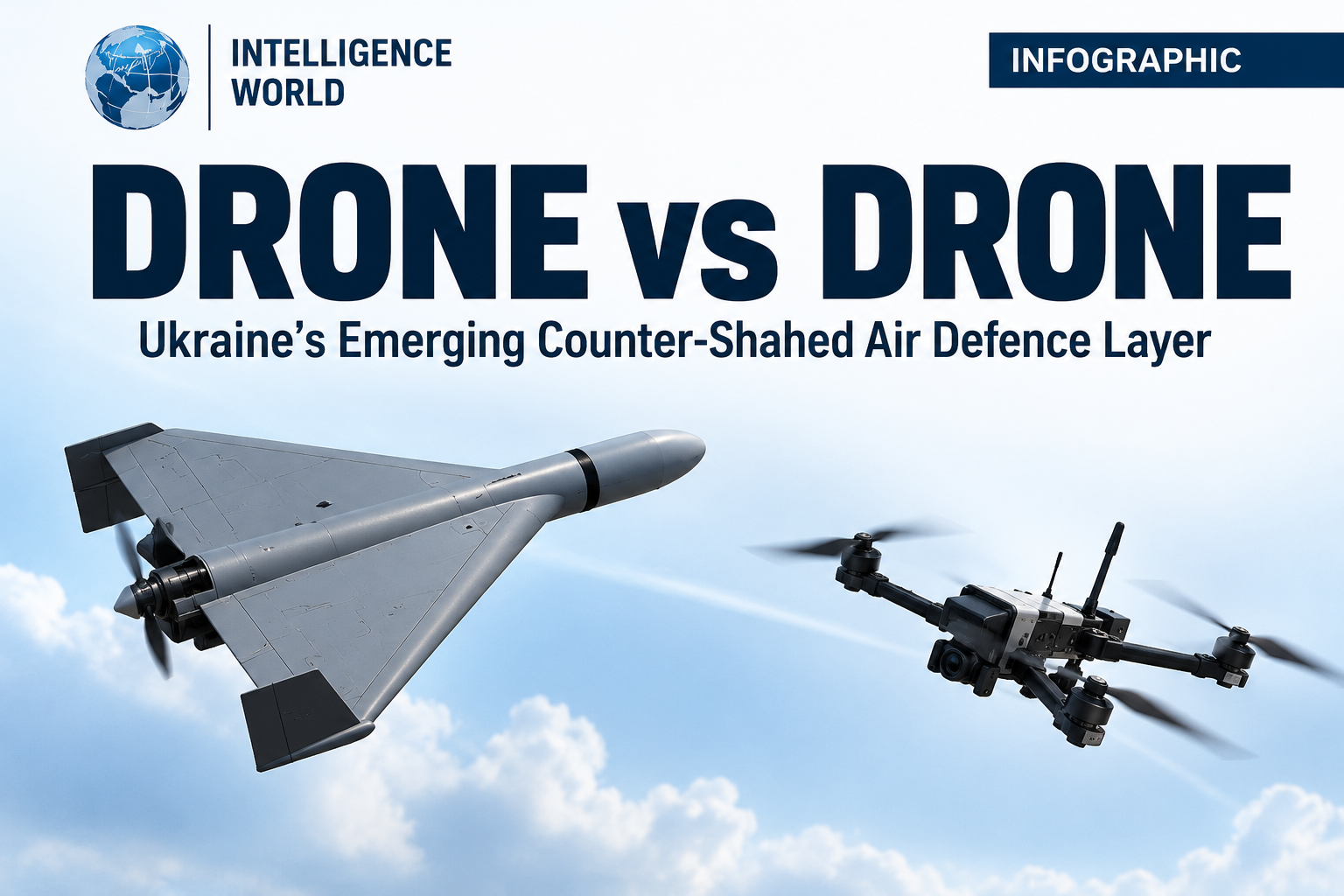
How Ukraine is integrating sensors, C2 and low-cost interceptor UAVs to counter the evolving Shahed/Geran threat.
-
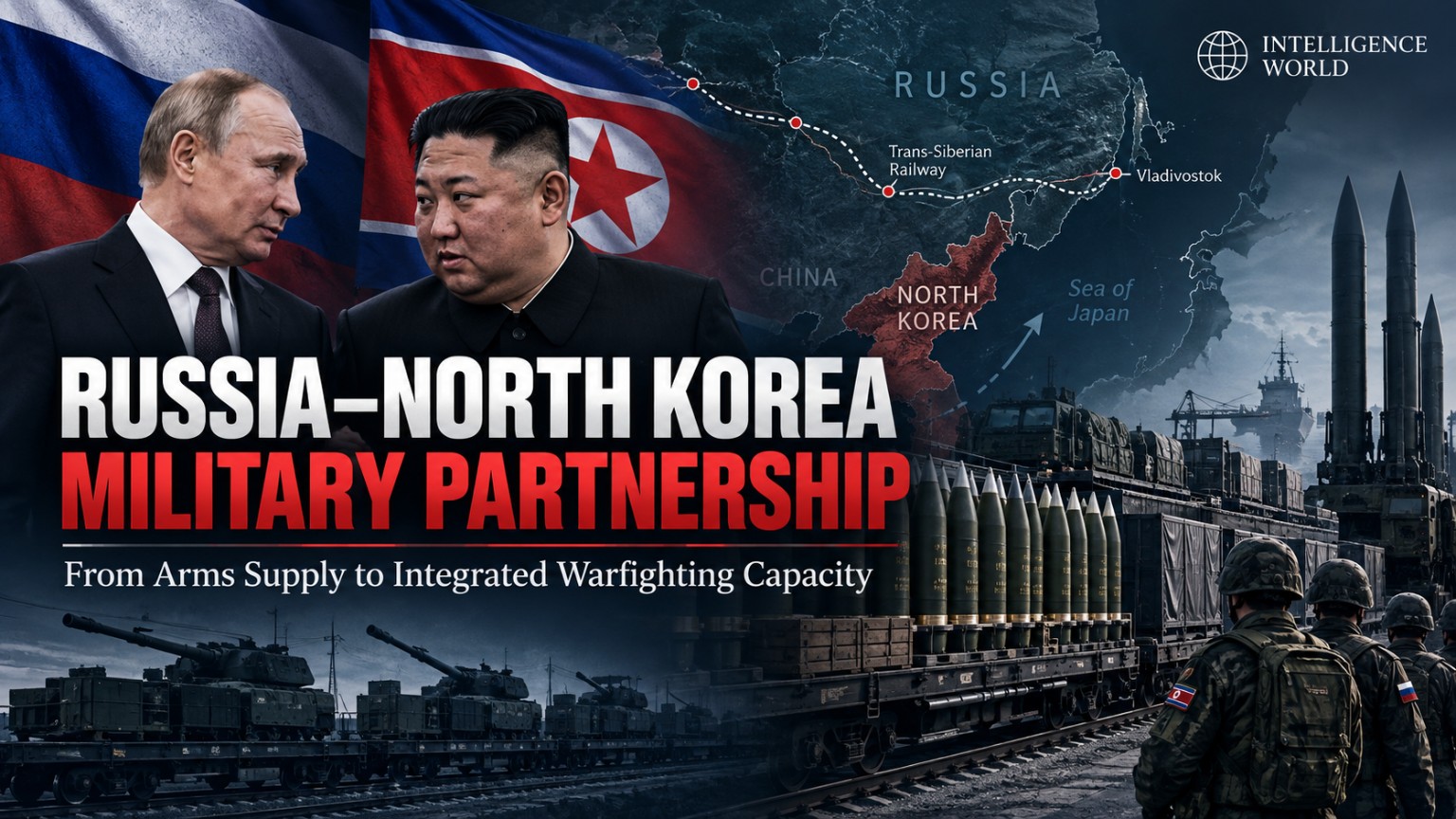
From Arms Supply to Integrated Warfighting Capacity This dossier examines how Russia–North Korea military cooperation has expanded from ammunition transfers into a wider system of missile supply, personnel deployments, training and military-technical exchange. It assesses the operational value and integration limits of the partnership, and identifies indicators that will show whether wartime support develops into…
-
Satellite imagery following the Ukrainian strike against the Azov Optical-Mechanical Plant in Russia’s Rostov region shows damage to five production buildings. Industrial documentation analysed by specialist sources links the facility to component supply chains supporting several Russian missile programmes. The longer-term impact on production remains under assessment. Source: Commercial satellite imagery, Ukrainian military reporting and…